
 MY ACCOUNT
 STORAGE LEVELS
 WATER DATA
 ANNOUNCED ALLOCATIONS
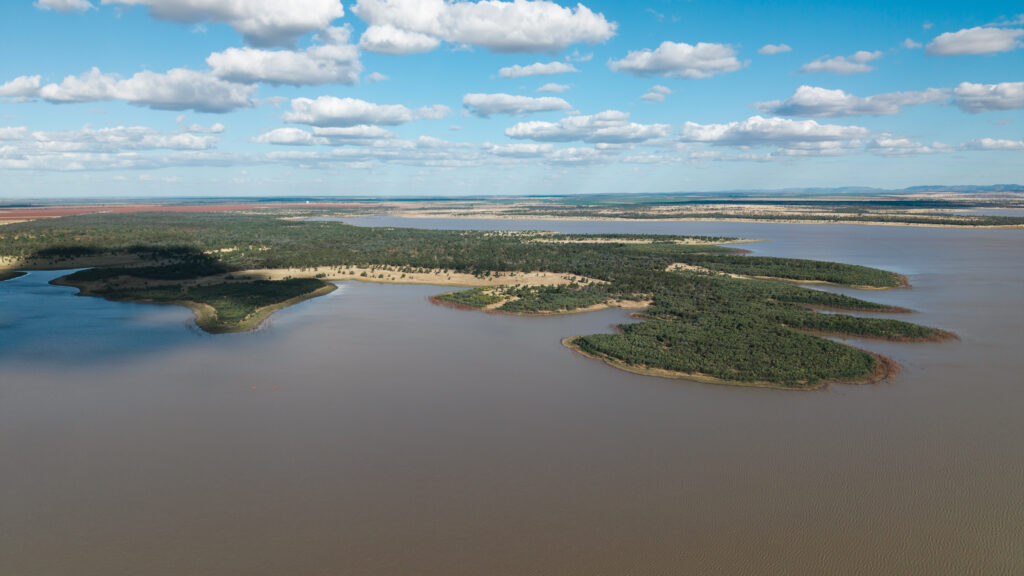
Significant wet season rainfall has resulted in a great start to the new water year across regional Queensland.
Sunwater has confirmed all high priority allocations across the state will start at 100 per cent for the fifth consecutive year, providing certainty for customers.
Following significant rainfall during the summer, many storages across Sunwater’s network reached capacity and continue to hold high water levels into the dry season
Only five of Sunwater’s 22 water supply schemes will begin the 2026–27 water year with medium priority allocations below 100 per cent.
Sunwater Executive General Manager Operations and Customers Colin Bendall said the solid numbers ensured water security for farmers, industry and towns.
“This year’s good allocation figures highlight how important water infrastructure is for supporting our regional communities,” he said.
“Our dams and weirs play a critical role in capturing and storing water during the wet season, ensuring it is available for irrigation, industry and towns through drier periods.”
Inflows into Fairbairn Dam, near Emerald, have delivered welcome numbers for Central Highlands growers that rely on water from Queensland’s second biggest dam.
Customers for the Nogoa Mackenzie scheme will start the year with a with a medium priority allocation of 50 per cent, after being at zero per cent 12 months ago.
“This outcome is a welcome relief for irrigators in the Central Highlands region who have faced challenging conditions for several years,” he said.
Mr Bendall said Sunwater remained focused on maximising water availability for its customers and the community for the years ahead.
“We are conscious we are moving into a period of forecast drier weather, so Sunwater’s focus will be on efficiently delivering the water our regions need to underpin growth and prosperity,” he said.
Highlights for 2026–27 include:
- 100 per cent high priority allocations across all schemes
- Only five schemes with medium priority allocations below 100 per cent:
- Burdekin Haughton: 81% plus 269,898ML carryover
- Chinchilla: 24%
- Cunnamulla: 59%
- Nogoa Mackenzie: 50% plus 75,000 ML carryover
- Upper Burnett (John Goleby Weir): 91%
- Strong allocation outcomes continue in the Burnett and Lower Mary, with schemes at or near full allocations following improved seasonal conditions in recent years.
- In southern Queensland, the Upper Condamine scheme has reached 100 per cent medium priority allocations for the fourth consecutive year.
Medium priority allocations for 2026-27
| Scheme | Dams / weirs | 2025 / 2026 | 2026 / 2027 |
| Barker Barambah | Bjelke-Petersen Dam | 100% | 100% |
| Bowen Broken | Eungella Dam | 100% | 100% |
| Boyne River & Tarong | Boondooma Dam | 100% | 100% |
| Bundaberg Burnett | Paradise Dam | 100% | 100% |
| Bundaberg Kolan | Fred Haigh Dam | 100% | 100% |
| Burdekin Haughton | Burdekin Falls Dam | 100% | 81% |
| Callide (ground water) | Kroombit Dam | 75% — 100% | 75% — 100% |
| Chinchilla | Chinchilla Weir | 71% | 24% |
| Cunnamulla | Allan Tannock Weir | 69% | 59% |
| Upper Dawson Valley | Glebe Weir Theodore Weir Moura Weir | 100% | 100% |
| Lower Dawson Valley | Neville Hewitt Weir | 100% | 100% |
| Lower Mary | Mary River Barrage | 100% | 100% |
| Mareeba Dimbulah | Tinaroo Falls Dam | 100% | 100% |
| Nogoa Mackenzie | Fairbairn Dam | 0% | 50% |
| Proserpine | Peter Faust Dam | 75% – 100% | 75% – 100% |
| Three Moon Creek | Cania Dam | 100% | 100% |
| Upper Burnett | Wuruma Dam | 100% | 100% |
| John Goleby Weir | 97% | 91% | |
| Upper Condamine | Leslie Dam | 100% | 100% |
Allocations – background
- Allocations are set at the start of the water year and cannot decrease as dam capacity levels reduce.
- Should inflows occur or usage be less than predicted, allocations can increase up to a maximum of 100 per cent.
- Allocations are calculated based on formulas prescribed in each water supply scheme’s Resource Operations License, which considers – among other factors including evaporation and environmental flows – the total volume of water in a dam.
- Medium Priority water allocations generally have lower reliability compared to high priority water allocations and are mainly used for agricultural production.
- High Priority customers pay a higher fee for more reliable water access and allocations are typically used for town water supply and industrial use