
 MY ACCOUNT
 STORAGE LEVELS
 WATER DATA
 ANNOUNCED ALLOCATIONS
Blue-green algae
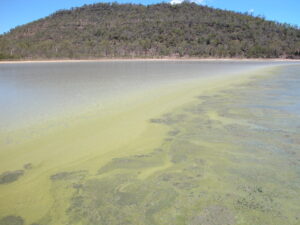
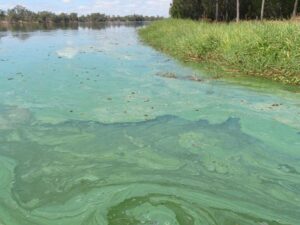
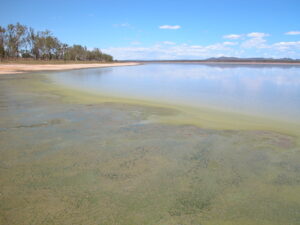
What are blue-green algae?
Blue-green algae (BGA), also called cyanobacteria, are tiny organisms that live in freshwater across Australia.
They have features that give them a competitive advantage. Some species can:
- use nitrogen from the air so they can grow when nutrients are low
- survive in poor water quality conditions and stop other algae growing
- move up and down in the water to find light and nutrients.
In warm weather, sunlight and high nutrient levels help BGA grow quickly. This can lead to large blooms. In winter, cooler weather and less sunlight usually slow their growth.
Most BGA are harmless, but some produce toxins. These can
- affect humans, animals and aquatic life
- contaminate drinking water
- cause skin irritation or illness (if swallowed).
What do blooms look like?
Blooms may appear as:
- green, blue or reddish-brown scum on the water surface
- paint-like streaks or clumps
- discoloured water with a musty or earthy smell.
Not all visible blooms are harmful. Some harmless algae can look similar so proper testing is important.
Keeping you informed
Sunwater regularly monitors BGA in our storages and updates the public about any potential risks. Signs are placed at affected locations. However, BGA blooms can form quickly between checks.
If you see algae, scum or discoloured water:
- avoid contact with the water
- keep pets and livestock away.
How Sunwater monitors BGA
Sunwater regularly checks for BGA blooms. We send water samples to a laboratory to identify:
- what species are present
- how much BGA is in the water
- whether toxic species are present
- the hazard level.
Managing BGA
Managing BGA blooms is difficult because:
- there are no safe, large-scale chemical treatments
- the size and depth of Sunwater’s storages make it impractical to treat blooms directly
- blooms are often caused by nutrients like nitrogen and phosphorus from upstream land use.
Long-term solutions need catchment-wide land and water management practices, which are outside Sunwater’s control.
Potential impacts
Health
You can be exposed to BGA by:
- touching the water e.g. when swimming, paddling, waterskiing or jet skiing
- breathing in spray while boating or fishing
- drinking untreated water or eating affected fish or crayfish.
Health effects may include:
- skin rashes and eye irritation
- nausea, vomiting, diarrhoea, fever and headaches
- breathing issues
- liver or kidney damage.
Irrigation and livestock
High levels of BGA can block pumps and filters and reduce water quality for crops and livestock.
Industrial
BGA blooms can:
- clog water treatment filters and membranes
- reduce efficiency
- increase maintenance needs.
Environment
BGA blooms can harm aquatic ecosystems by:
- reducing oxygen levels when they die
- blocking sunlight to plants
- releasing toxins
- outcompeting native algae, which affects biodiversity and food webs.
Stay informed
You can stay up to date by:
- visiting our website for water quality alerts
- checking the Sunwater app
- reading the signage posted at our storages.
For more information, visit the Water Quality Australia and Queensland Government websites.
BGA levels by storage
Allan Tannock Weir
Bedford Weir
Ben Anderson Barrage
Ben Dor Weir
Bingegang Weir
Bjelke-Petersen Dam
Boondooma Dam
Bowen River Weir (Collinsville Weir)
Bucca Weir
Buckinbah Weir
Burdekin Falls Dam
Callide Dam
Cania Dam
Chinchilla Weir
Clare Weir
Claude Wharton Weir
Coolmunda Dam
Dumbleton Weir
E.J. Beardmore Dam
Eden Bann Weir